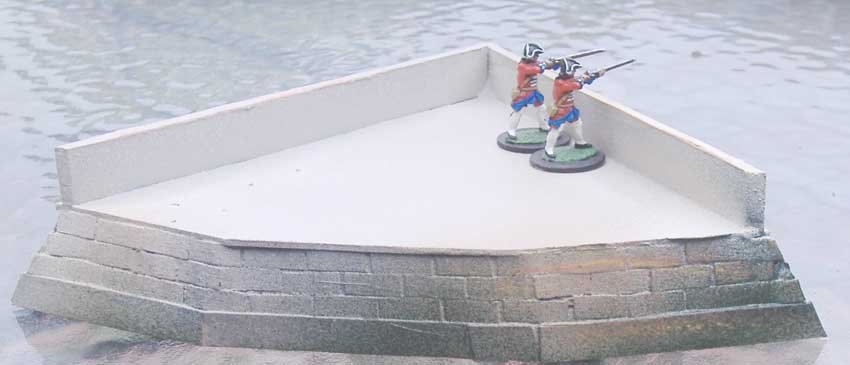
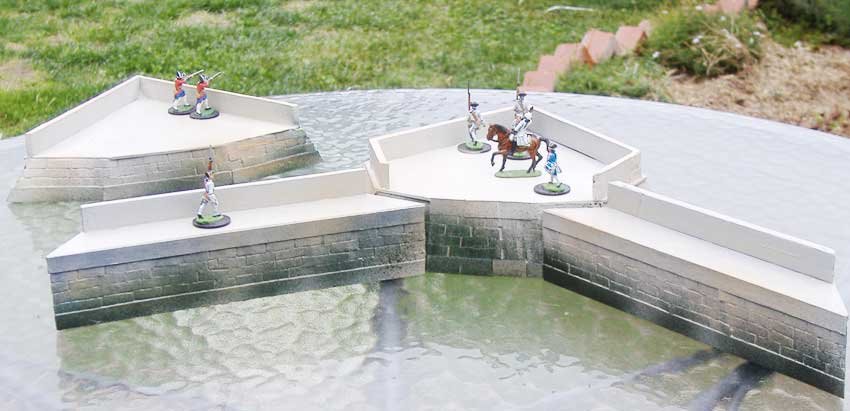
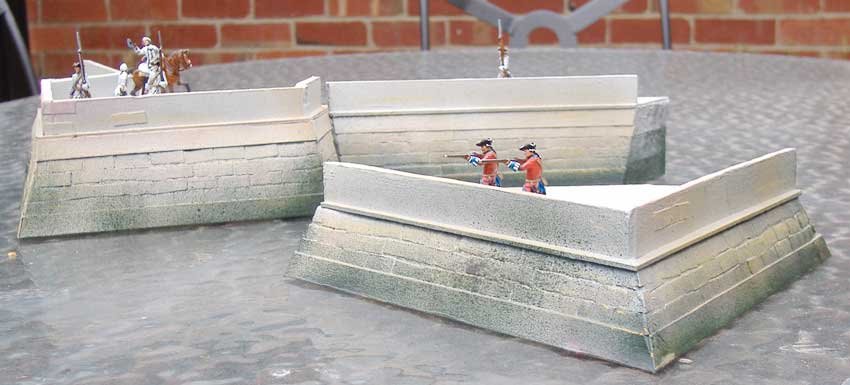
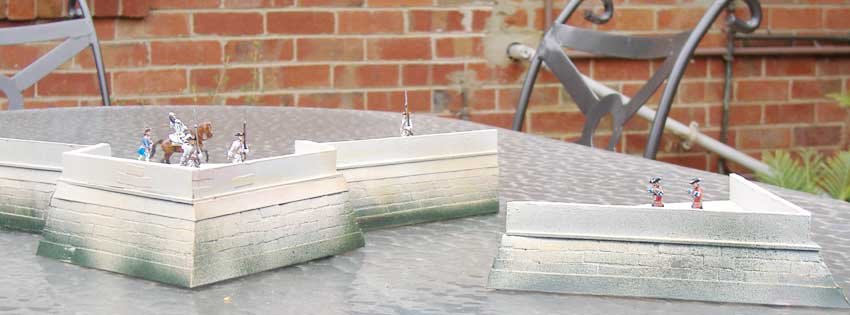
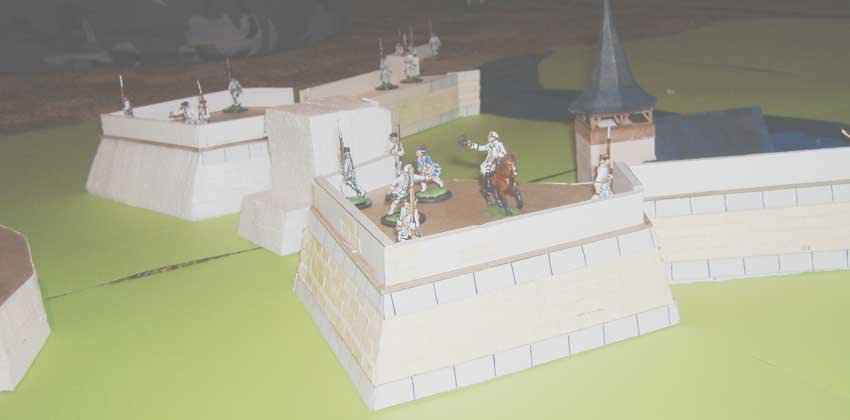

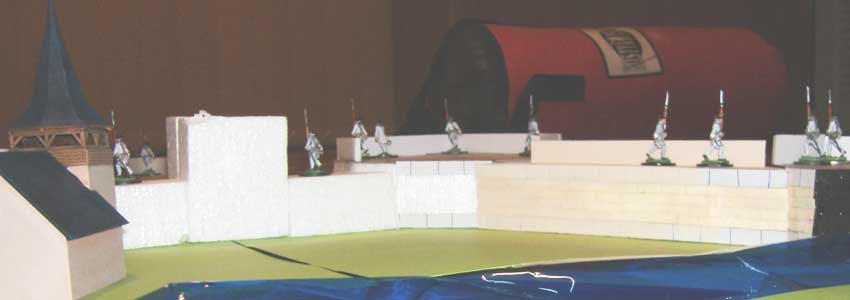

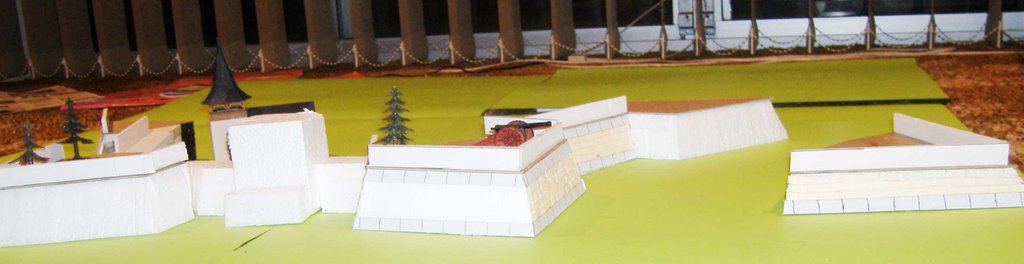

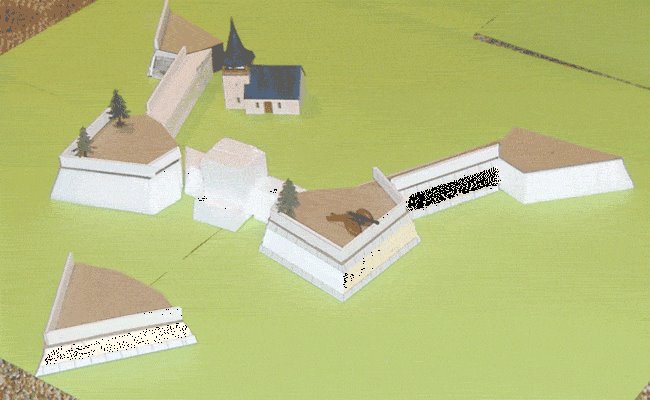


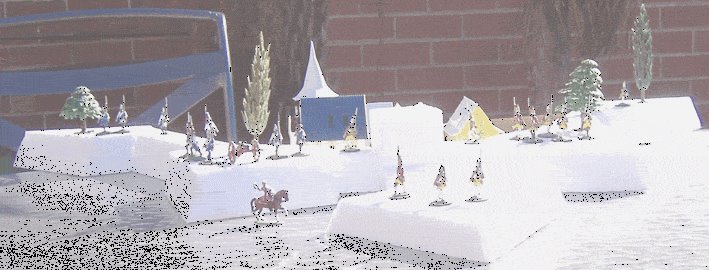
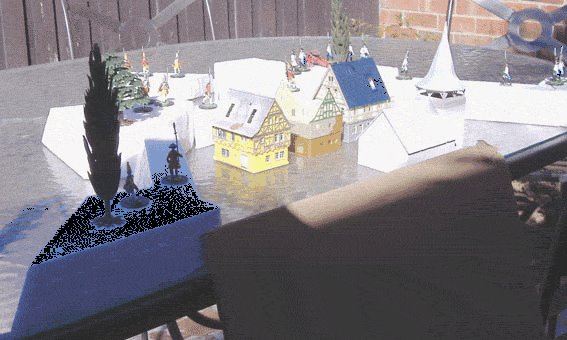
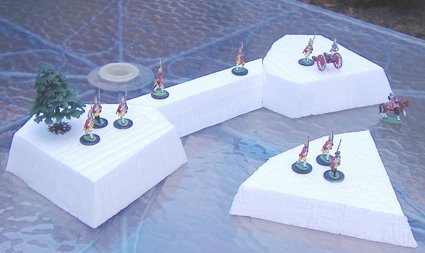
 I bought a hot wire cutter today and used it to trim up some of my polystyrene hills for Blasthof. It was a novel experience, and one I haven't had since primary school.
For those of us who may not have the book:
The Move consists of five phases:
Normal | Hills | Woods | Marshes | Obstacles | |
Cavalry | 12 | 6 | 6 | Na | 6 |
Infantry | 6 | 3 | 3 | 3 | 3 |
Artillery | 6 | 3 | Na | Na | 3 |
.
i. The gun must be manned by at least 4 soldiers. The target must be visible from the gun and not more than 45° left or right of the direction in which the gun is pointing. The path of the shell or round-shot must not be closer than one inch to any other troops of the same army.
ii. If these conditions are met, measure range to target, then throw dice:
Range to Target&Dice Score to Hit
3’ ****************** 6
2’6” **************** 5
2’ ****************** 4
1’6” **************** 3
1’ ****************** 2
6” ****************** Automatic Hit
iii. If the target is hit, throw dice to decide the ‘standard’ number of casualties. If the range is more than nine inches, the number on the dice is halved to give the standard number; if nine inches or less, the number on the dice is the standard number.
i. Target must be visible to firer, not more than 45° to right or left, and lines of fire must not pass closer than one inch to own side.
ii. Long range (3” to 6”) - throw one dice per 8 infantrymen capable of firing. The number on each dice is halved for the standard number of casualties.
iii. Short range (0 to 3”) - throw one dice per eight infantrymen as above, but the number on each dice is the standard number of casualties.
iv. A dice can be thrown for not less than 4 infantrymen. The number on the dice is then halved, and should be halved again if the fire is at long range.
v. Infantry receiving fire can count their casualties when returning that particular fire, casualties must then be immediately removed.
i. If a gun crew is the target, a 6 on the dice destroys the gun. Otherwise the man behind the gun is No. 1 and you continue counting clockwise until all casualties have been removed. Guns can only be destroyed by fire from an opposing gun.
ii. Infantry or gunners returning fire next turn can count their casualties as effective for purposes of returning fire only. Such casualties must then be immediately removed.
If more than half the original number of soldiers in an army have been removed from the board as casualties, that army has been defeated and can fight no more.
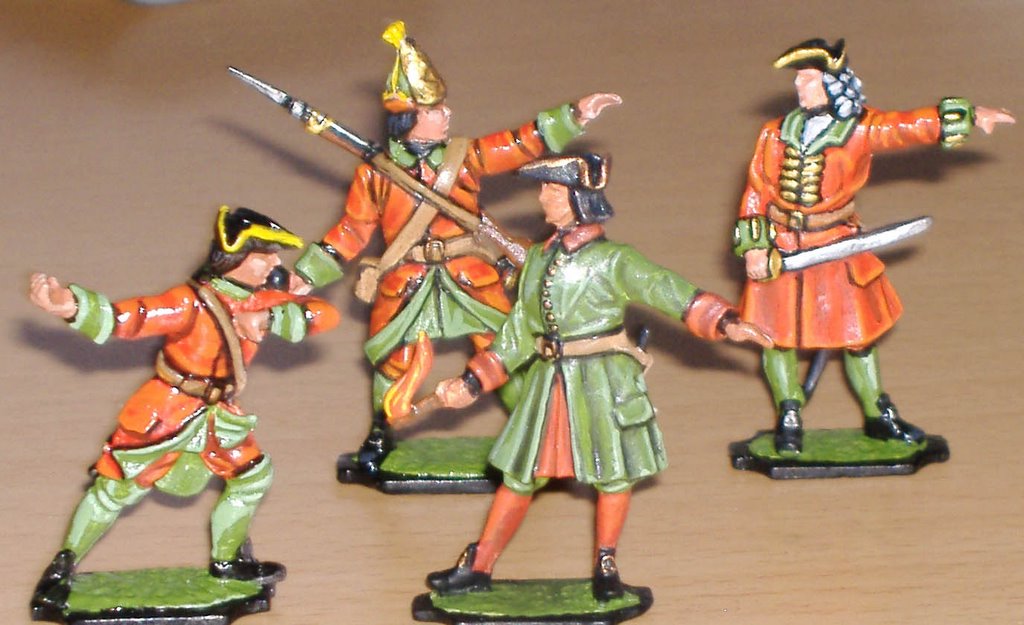
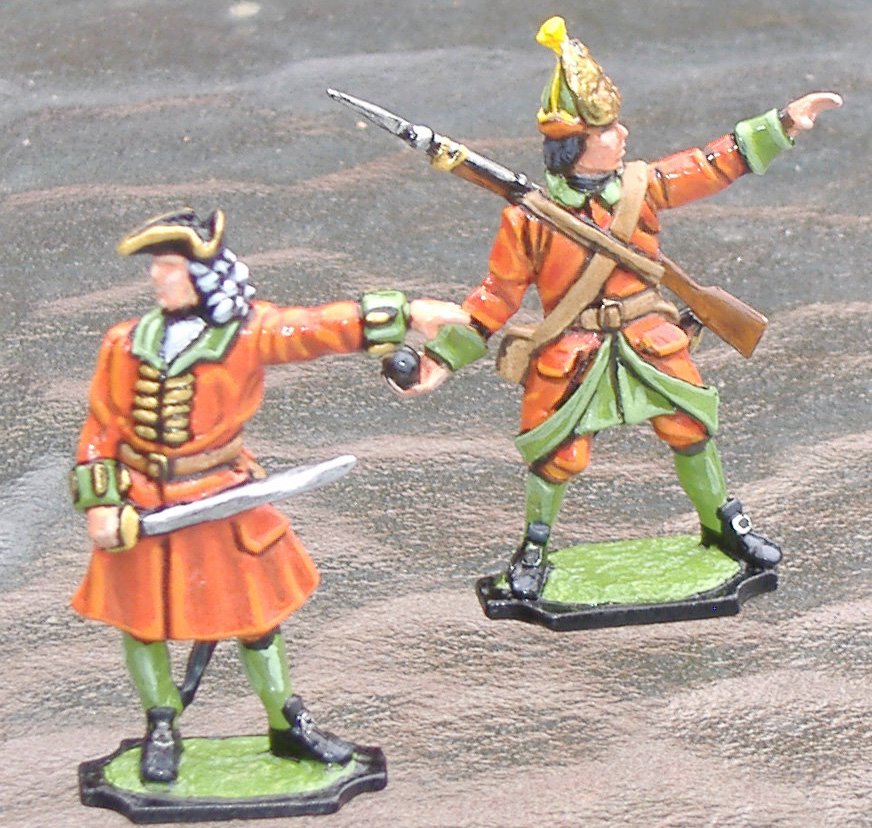


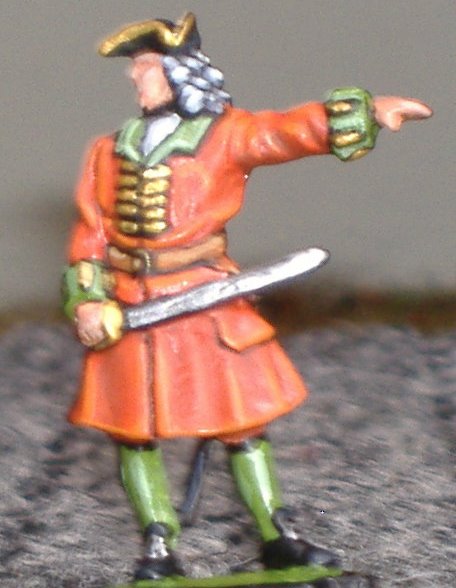
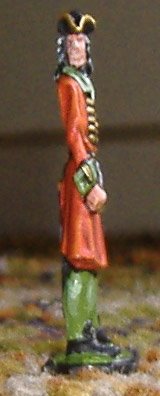
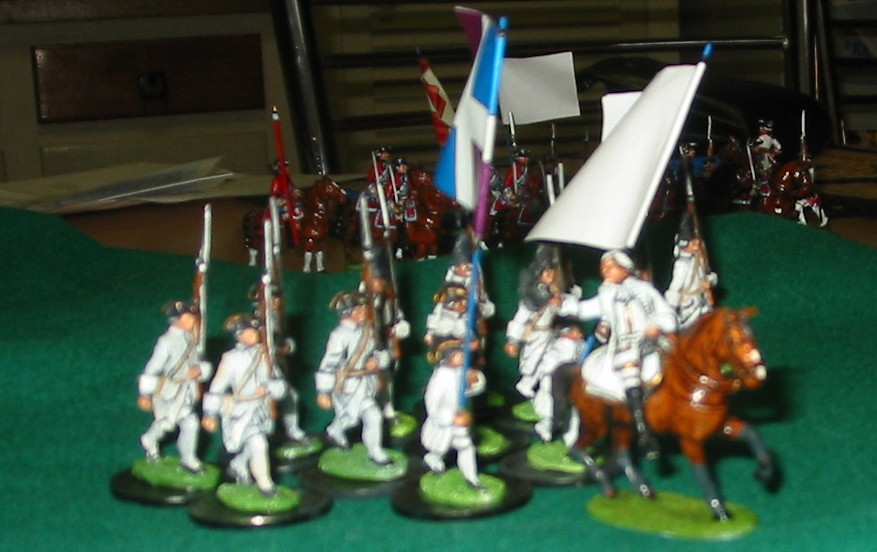
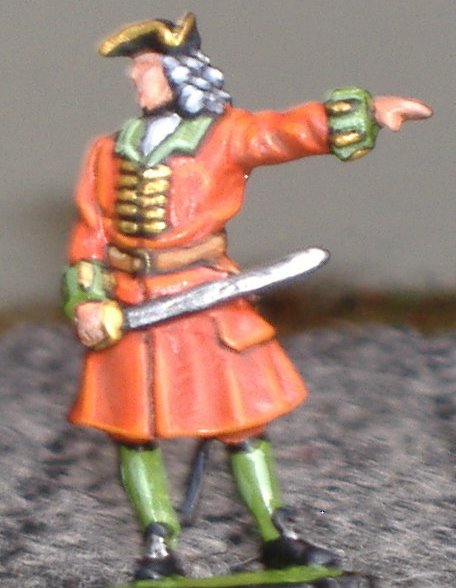
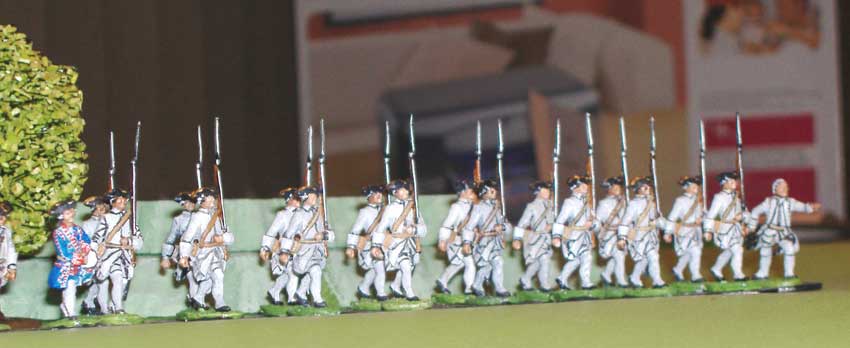
I've some few Surens I'm wanting to use up, and what better regiment of foot to use them up on - the rank and file are RSM while the officers and NCOs will be these fine felows. One of my earliest posts shows another couple of officers whose coats need re-painting in this chap's manner.
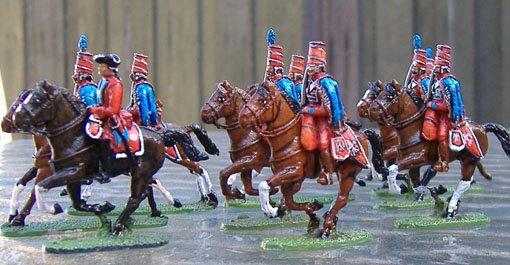
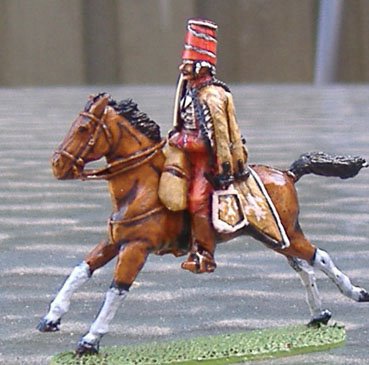


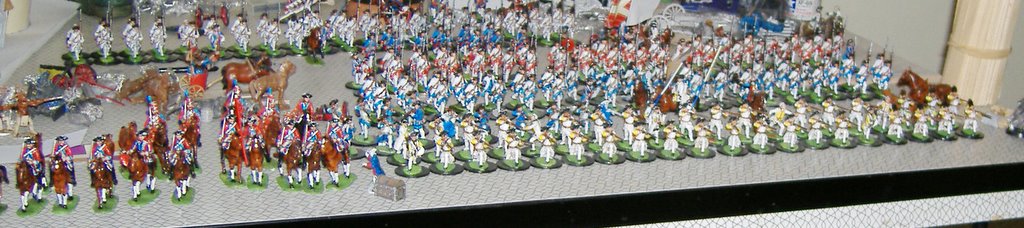
Take a look at that. Eye candy or what?
Cavalry
Prussia
Infantry
Cavalry
Artillery
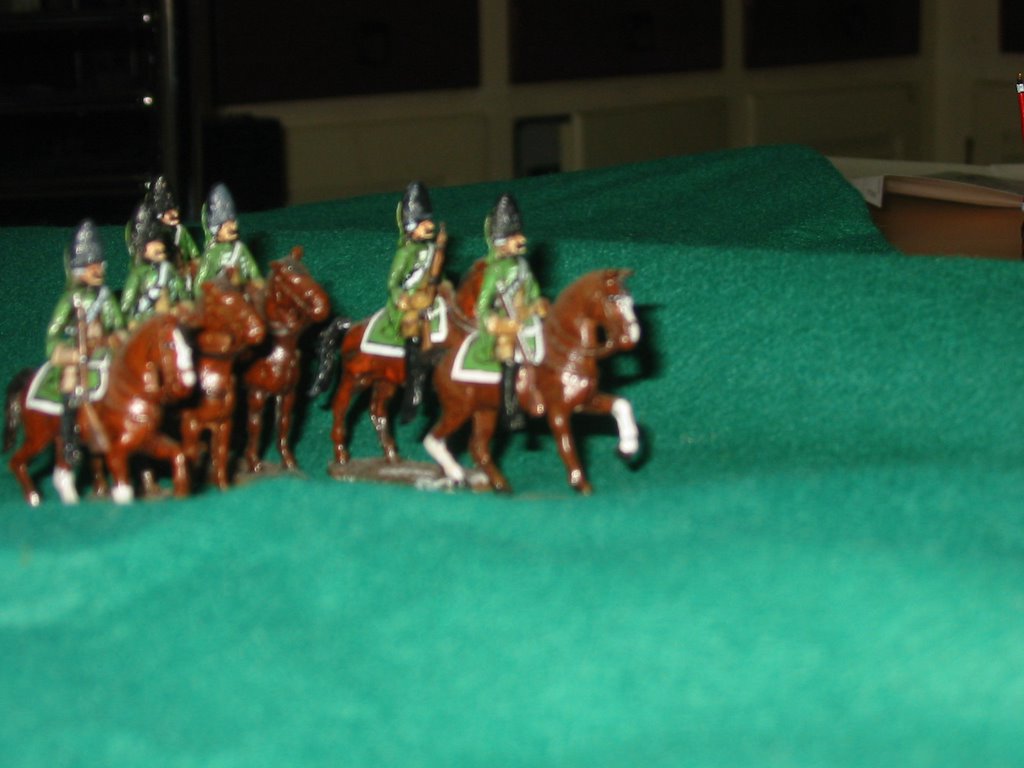
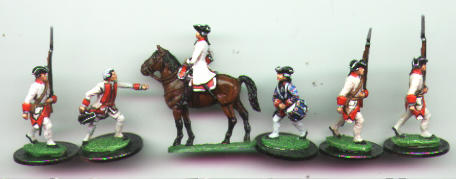
That's about 200 figures in round numbers and does not count any of the samples I've painted up (like those Highlanders or the Gardes Suisses) or units I've begun and have to get on with (Gardes Francaises, Regiment Bourbonnois, Cavalry Regiment Wurttemburg) or have set aside temporarily (Saxon Leibgrenadier Garde, Kurprinzessin Regiment and von Bruhl's Regiment, as well as the men of the Compagnies Franches de la Marine) or even those I have bought figures for but not even started to think about painting - like my two batteries of French artillery or those two regiments of Austrians who are pegged as Bavarians for some time next year!
I suppose the upshot of all this is a vote of theanks to the guys over at the OSW group without whom I'd never have had the impetus to "think big". Cheers, chaps.
In the past couple of weeks I have taken delivery of a second-hand, ex-library copy of Charles Grants "The Battle of Fontenoy". Thank-you Bookfinder.com.
I also have to admit to a slow and growing bias toward structuring my Armies after those that fought this battle.
These factors, along with my own long-standing interest in the French and Indian War has led me to believe that a unit or two of Highlanders are absolutely indispensible to my collection.
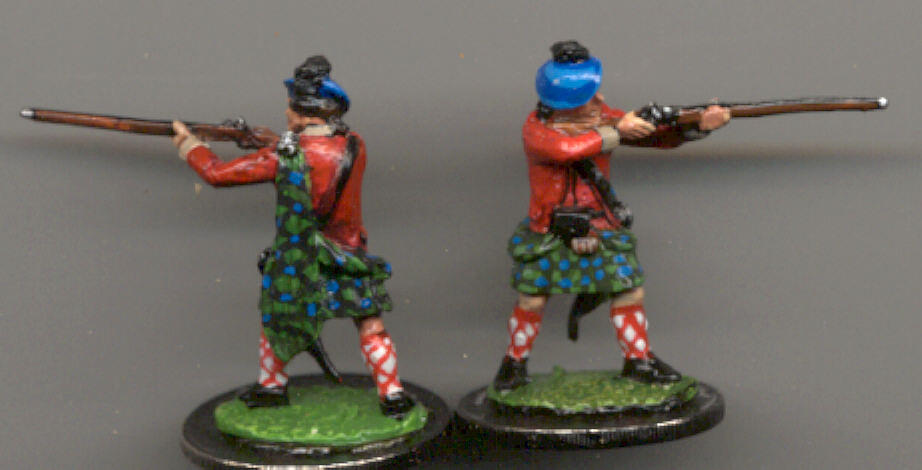
I have plucked up the courage to start painting some Highlanders.
Courage? I hear you ask. Why yes, I reply. Highlanders are famously intimidating for more than just their reckless charges with the Claymore.
It's the tartan.
How do you paint it? It's so complicated! I know, I've tried.
My first experiment was with the Royal Stuart Sett (this is a technical term that means "pattern" as far as I am concerned) that looked like someone had been ill on a pizza. Yuk.
My references have pointed me at two regiments for the periods/theatres I'm interested in. My Blanford "Uniforms of the Seven Years War" has men of the 42nd and 78th regiments, both in a dark green tartan with black or very dark green overstriping. Figure 133 is a grenadier in a fur cap that would have not been out of place in the AWI. His sett has a red "overstripe" (ie, a thin, sparse, red stripe over the larger pattern of the sett) in addition to the basic "Government" tartan. Apparrently this was an additional mark of his status as a grenadier. Alan Saphersons' "A Basic Guide to Armies and Uniforms of the Seven Years War" is in complete agreement. My Osprey MAA-285 "King George's Army 1740-93: (1) Infantry" offers on plate A3 an alternative in the form of the short-lived 64th Highlanders who should have had the same sett as the 78th or 42nd, but may also have had a red tartan of the kind you might see on a tin of short-bread. Maa 48, "Wolfe's Army" likewise ascribes the red sett to the 78th, but this is conjectural according to the notes on the plate.
Based on all this I am most definitely doing the 42nd Regiment in their green sett and buff facings. I am also thinking very hard about doing the 78th who could double up as the 64th at Culloden - both seem to have had white facings. Whether I do them in the green or red sett is another thing. I like the red sett as a point of difference from most other Highland units, but feel that the darker tartan stands ou better against the red doublets.
So, on to painting the Tartan.
I prime my figures white and then paint all the flesh areas in their base colour and follow that with a thin was of sepia ink. This includes the knobbly knees.
I give the kilt and plaid a thinnish coating of a nice mid-green. In my case this is Vallejo "Goblin Green". Because it is slightly thinned down, it shades and highlights itself enough without being heavy handed. I then over-paint a grid of dark stripes with a mix of 50:50 black and green with no more than three horizontal stripes and a vertical every 2-3mm.
When dry I mix up a lightish blue (whatever looks good to you) and paint a little square wherever the dark lines intersect on a flat or raised part of the kilt or plaid. Likewise, I mix a 50:50 white and green and apply it to the raised or flat parts of the kilt/plaid - this is also a good opportunity to do a little cutting in on the grid lines - these are never steady or even and can always do with some tidying up.
The hose are very simple. Starting with the white undercoat, paint 4-5 clockwise spirals down the leg, eack reaching abour half the circumference of the limb. Do this first clockwise then anti-clockwise. Paint a circle of red around the top of the hose, a black shoe at the bottom, then cut in with white where coffee has caused your brush to err!
I'll post a pic in a day or so to demonstrate all this palaver.
As for the red sett, give me time to nut it out. I suppse the key here is to give the impression of Tartan while not driving oneself insane.
One additional point is that slightly thinned paint that flows evenly is preferable than thickish paint that covers well. I would much rather give an area an extra coat than have my paint blob or cover a detail I was trying to paint. Make your paint about the consistency of milk and you can't go too far wrong.